The Benelli 402 S Looks fab, Is Being Considered For India


The Benelli 402 S Looks fab, Is Being Considered For India

A Small capacity, aggressively styled motorcycle, the Benelli 402 S, if priced right, could do really well in India. Revealed at the EICMA 2017, the 402 S’ design is clearly inspired by the Ducati Diavel and it shared the Benelli pavilion with the confirmed for launch in India, the Imperiale 400 at the show.
November 10, 2017-Benelli-402S-005.jpg


Underpinned by an exposed trellis frame which drops down towards the saddle, the Benelli 402 S gets a short sub-frame which almost makes it look like a single-seater until you observe the tiny little pillion seat which sits above the spartan bodywork and split taillights at the rear. Like the MV Agusta Brutale, the licence plate holder and rear turn signals have been embedded into the rear tyre hugger.

November 10, 2017-Benelli-402-S.jpg


Powering this motorcycle is a 399.3cc, liquid-cooled, DOHC, four-valve-per-cylinder, parallel-twin engine, which is good for 39.4hp at 9,000rpm and 35Nm of torque at 7,000 rpm. Mated to a six-speed transmission the motor also features two, 37mm throttle bodies.

November 10, 2017-Benelli-402-S-rear.jpg


Below the LED front headlamp, suspension duties are handled by 41mm USD forks up front and a monoshock at the rear which is adjustable for preload. Braking capabilities should also be impressive as two semi-floating 260mm discs with four-piston calipers are mounted at the front, along with a single 240mm rear disc and ABS is offered as standard.

November 10, 2017-Benelli-402S-headlight.jpg


Tipping the scales at 160 kilos, the Benelli 402 S runs 17-inc alloys, where the front gets 120-section rubber while the rear sports a 160-section tyre. A 16-litre fuel tank should hold enough juice for long rides. If priced right, the Benelli 402 S could be lapped up by many, just because it looks like that. But in addition, powered by that twin-cylinder motor which cranks out a decent amount of power, this could be another Benelli which could fly out of showrooms in quick time like the 600i.

Amazon finally makes a waterproof Kindle, after 10 years of Kindles


Amazon has been selling Kindles for 10 years now, but “waterproof” hasn’t appear on its list of incremental technological advancements until now. The company just announced a new version of its popular e-reader that builds on last year’s Kindle design and now has an IPX8 waterproof rating.
The new Kindle Oasis — the same name as last year’s premium Kindle — has jumped up in size, moving from a 6-inch screen to a 7-inch screen. It has an aluminum back, which gives it a more premium look and feel than the Kindles with soft-touch plastic.
Unlike last year’s Kindle Oasis, which used a magnetic case you attached to the e-reader to extend its battery life, the new Oasis relies entirely on its built-in battery. It has a similar physical design, with one thicker side that tapers down on the other side, for one-handed reading. But Amazon has made a point of saying that it managed to fit in a bigger battery, while keeping the tapered side of the device at 3.4 millimeters.
The resolution of the e-paper display is the same at 300 ppi, but it has a couple extra LED lights now for a brighter, more even-looking display. And it also has ambient light sensors that adjust the brightness as you move from room to room, or from outdoors to indoors. (The earlier Voyage Kindle does this, too.)
There are physical page-turn buttons, plus the touchscreen page-turn option; Amazon says it’s worked on both the hardware and software side of things to make page-turning feel faster. 

But the big news with the upgraded Oasis is its waterproofing, a long-requested feature from some Kindle fans. (Yes, last year’s model was called Oasis and wasn’t waterproofed.) The new e-reader has been tested in two meters of water for up to 60 minutes. It’s also been tested in different water environments, like hot tubs, pools, and bubble baths. Amazon declined to say how it waterproofed the Kindle, but since it still has an open USB port for charging, it’s recommending that people stand the Kindle upright after it’s been submerged.
Audible fans will be happy, as well: the new Oasis has a built-in Audible app. This doesn’t mean you can listen to Audible from the Kindle itself — it still doesn’t have any speakers — but you can start an audio book from the device and stream it over Bluetooth to a set of headphones or a speaker.
The new Oasis ships at the end of October and is replacing last year’s Oasis, leaving four Kindles total in Amazon’s lineup: the original Kindle ($80), the Kindle Paperwhite ($120), Kindle Voyage ($200), and the Oasis, which starts at $250 for an 8GB model. That’s double the base storage of previous Kindles, which Amazon says is to accommodate the storage of audio books. It also connects over both Wi-Fi and 4G LTE.
Amazon has been notoriously coy when it comes to saying how many units of Kindle it has sold — which was the first piece of hardware Amazon ever made and sold — but Kevin Keith, Amazon’s general manager of devices, said in an interview that sales are still “quite good,” with “tens of millions” sold. He also noted that Kindle is in more countries than any other Amazon device.
“Kindle” has indeed become synonymous with “e-reader” over the past decade, but that doesn’t necessarily mean Amazon will enjoy the same kind of Kindle success over the next 10 years. In 2016, data showed that ebook sales were down, while sales of physical books surged. And in 2015, a Pew research report on American device ownership showed that e-reader ownership was down significantly from the year prior. According to non-Amazon data, it seems to have reached its peak in 2011.
But a spokesperson for Amazon said that Kindle is still as “relevant as ever,” pointing out that Kindle sales are up year-over-year globally and that it had its best-selling day ever on Prime Day of this year.
For now, at least, there’s a new Kindle you can drop in the bath, the hot tub, or wherever else you enjoy your ebooks when you need a break from the internet.
Update: This article has been updated to include more context on Kindle sales from Amazon. Also, the price of the new Kindle was reported incorrectly in an earlier version of this article. The story has been updated to reflect that it is listed as $249.99 ($250), not $248.


Bengaluru has most takers for self-driving car engineering course


Elon Musk, the man behind SpaceX, Tesla Motors and SolarCity, turns 46 today. On his birthday, we bring to you some lesser-known facts about the man who aims to send humans to Mars

 Three years ago, a career in self-driving car engineering would have been unimaginable. But this rather unique area of expertise is catching the fancy of Indian techies now. And Bengaluru, the IT capital of the country, is at the forefront with high number of takers for a course in self-driven car engineering.

In September 2016, Udacity, an online learning platform, was the first to launch a nanodegree called self-driving car engineer, a technology which is picking pace globally. Among the 50,000-plus applications for the course from across the globe, 500 were from India. Finally, 7,000 students were selected for the nanodegree. Bengaluru recorded an enrolment of over 18%, making it the highest in the country, followed by Mumbai (12%), Hyderabad (12%) and Delhi-NCR (11%).

Speaking to TOI about this new-age technology, Ishan Gupta, managing director for India, Udacity, said, "Self-driving cars are set to revolutionize the way we live. This is transformational technology, based on cutting-edge techniques of robotics, machine learning, software engineering and mechanical engineering."

"With technology stalwarts like Infosys now working on self-driving car projects, there's a lot of buzz around this technology. Startups like Flux Auto and Ati Motors are working in this field," Gupta added.

The 12-week course spread over nine months is equipped with interactive quizzes, lessons by industry professionals, one-on-one coaching and mentoring, tailored industry project portfolio and coach-supported forums for students to discuss lessons.

"Even three years ago, no one would have thought about a job profile of self-driving engineer. But, now we have hiring partners like Hi-Tech Robotics Systemz, KPIT, Tata Elxsi, Ati Motors, MapmyIndia, among others, looking out specifically for self-driving car nanodegree students. That shows how much growth potential this industry has in the coming years," Gupta said.

On job opportunities the course could provide, Gupta said: "With all the automation required for these technologies, the current job functions might evolve and create opportunities that don't exist today. Forbes has reported that $400,000 worth job opportunities will be created in this field." 
Jobs of tomorrow

Udacity has launched two new programmes - Flying Car Nanodegree programme and Intro to Self-Driving Cars Nanodegree programme. "Our Flying Car Nanodegree program will teach students software skills and conceptual understanding necessary to build an autonomous flight system for a quadrotor, fixed-wing drones, and give them the skills to create autonomous flight vehicles that will be crucial to the future of transportation," said Gupta.

What's a nanodegree programme?

A skills-based educational credential programme, nanodegrees provide a student with specific skills mostly tailor-made for the profession they want to join. At Udacity, the nanodegrees are built with industry leaders like Google, Facebook, AT&T, Salesforce, GitHub, among others.

Global footprint

US, Canada, the UK, India, Brazil, China, Egypt, Middle East, South East Asia

Takers in India  

Bengaluru - 18%


Hyderabad - 12%


Mumbai - 12%


Delhi-NCR - 11%

AMD to hire 500 engineers in India, focus on augmented and Virtual reality

AMD is also sourcing talent and knowhow in technologies from institutes in the US such as MIT and University of Texas, Austin, apart from Indian institutes such as IITs and IIIT Hyderabad.

AMD is also sourcing talent and knowhow in technologies from institutes in the US such as MIT and University of Texas, Austin, apart from Indian institutes such as IITs and IIIT Hyderabad.

  American multinational semiconductor company Advanced Micro Devices is planning to expand its team in India nearly 40% by hiring 500 engineers to strengthen its focus on new technologies including augmented reality and virtual reality (AR and VR). In addition to this, the company is also looking to reskill its employees in AR and VR. "We are looking at AR and VR for now. We will hire fresh talent, but also we are heavily investing in upskilling and reskilling our existing employees to contribute to the changing demands," said Kiranmai Pendyala, chief operating officer-HR, AMD.

This is similar to its strategy a few years ago, when it started working on game console technologies and shifted a part of its workforce to the new unit. "We had set up the Radeon Technologies group to exclusively work in the graphics space, and identified machine learning and virtual reality as new growth sectors for us," Pendyala said.

Initially, AMD did not have these skillsets among its employees in Hyderabad and had to bring in some talent from the US. "We did job rotations, short-term assignments in different countries and practised reverse mentoring," Pendyala said.

AMD is also sourcing talent and knowhow in technologies from institutes in the US such as MIT and University of Texas, Austin, apart from Indian institutes such as IITs and IIIT Hyderabad. In India, the Sunnyvale, California headquartered company has 18% women among its 1,300 employees, higher than its global average of 15%. More than 50% of its workforce is outside of the Americas. Only 300 of its employees in India are in the software segment. "We largely have hardware engineers, that is, people who work with silicon," Pendyala said.

India to See First Deployment of 5G by 2020


The technologies namely 2G, 3G, 4G, 5G will co-exist, but when 5G comes, from an Indian context, 3G will take a slow pace because as you move forward in Gs (4G to 5G), the technology becomes more efficient India will see the first deployment of 5G by 2020, says Sanjay Kaul, MD (India & SAARC) at Cisco Systems. However, egacy technologies such as 2G will be around for 5-7 years due to the existence of a huge number of feature phones in the country, Kaul tells Tina Gurnaney in an interview.Edited excerpts:

What kind of trends do you see when it comes to data adoption in the country?

If you look at last three years, the amount of data we produced is equal to entire amount of data that we produced in the country for the last 30 years. Our prediction says that it will continue to grow at a faster pace.It owes to the technologies that we have in place like 4G, Wi-Fi, which is emerging as a common resource.Also, our behaviour as users on social networks has really helped boom the data.In last one year after Reliance Jio aunch, data has reached the next evel because it came free and it really proved that there was a hunger for consuming data and I think all that is good news for the industry.

How do you see older technologies like 2G, 3G coexisting with newer technologies like 4G, 5G?

We are a huge country with a huge pyramid where my sense is that 2G will survive at least another five years even though it is an old technology because there are a lot of feature phones still out there and they need to be supported. But in India, four worlds exist, you need to provide for all segments. The technologies namely 2G, 3G, 4G, 5G will coexist but when 5G comes, from an Indian context, 3G will take a slow pace because as you move forward in Gs, 4G to 5G, the technology becomes more efficient and particularly 5G technology has number of inherent advantages--you can do network slicing, it is ready for IoT (Internet of Things) kind of support.

How aggressively do you see telcos working towards bringing 5G in India?

Everybody's committed towards rolling out 4G, we're talking about another 50,000 4G base stations. My sense is that by 2020, you'll see first deploy ments of 5G in the country. 5G brings in ultra-speeds, it brings in low latency and for a lay man, who doesn't understand deep technology, it means that when you're consuming high bandwidth services, there is no disruption. Such networks provide seamless connectivity with speeds, ultra-speeds, with really low latency.

How important are future proof networks in the wake of new technologies such as IoT?


In the times of big disruptions, some questions loom over data security and data privacy. How can India ensure security while building its future networks?


It's not just that we build the network architecture; you need to have a security wrapper around this network. In everything we do from a technology standpoint, security has to be an embedded part of it. Today, we're very vulnerable but you'll see security will become as important as putting the basic note of creating the data and I think service providers and enterprises will really focus on that.

We are going to see a lot of work done on the policy front with new telecom policy and IoT policy coming in.What are the aspects that these policies can focus on?

What government can do is, it can create a very smooth policy structure. Industry players like us together with service providers and enterprises and integrators then have to rally behind that vision and execute it. Compared to last 10 years, the last two years have been phenomenal with new policies around spectrum trading and making spectrum available. There was a dearth of spectrum two years back but now there is enough spectrum. Service providers might complain that it's very expensive but it's there.

Apple iPad Pro 2018 model may have this iPhone X feature

<p><br>Representative image <br><br> <br> You can drag apps up from the dock into either side of a split screen.<br> <br> It's radically more powerful than what has ever been available on an iPad before.<br></p>
 Apple recently launched its anniversary edition iPhone - iPhone X with the much-talked Face ID feature. The company claims that it uses TrueDepth camera for its Face ID feature on iPhone X. Now, Apple tipster and KGi Securities analyst, Ming-Chi Kuo has made a prediction for upcoming lineup of Apple iPad. Kuo said that Apple will incorporate TrueDepth camera in its iPad models for the year 2018. This means that the upcoming iPads will also feature facial recognition.

According to a report by MacRumours, Kuo said that Apple will do so in order to offer similar user experience for iPhone X and iPads. The report further added that by doing this Apple is trying to build a new ecosystem, however, the feature will be limited to high-end iPad Pro lineup only. Earlier, Kuo predicted that the company will introduce the same Face ID feature in 2018 iPhone models. It is expected that the company will launch the new iPad models with Face ID feature in March next year.

Kuo also said that after the introduction of Face ID from Apple, Android developers will also work on the same technology for Android smartphones. He recommends that Android developers should shift their focus from under-glass fingerprint sensor to facial recognition technology. He also mentions that although Apple has received accolades for the new technology but its success totally depends on its users.


Apple's anniversary edition iPhone is all set to go on pre-orders in 55 countries including India starting October 27. It will hit the retail shelves starting November 3. Apple has priced the iPhone X, which comes in two storage variants 64GB and 256GB, at Rs 89,000 onwards in India. This means that the 64GB variant of iPhone X will be priced at Rs 89,000 while the 256GB variant is priced at Rs 1,02,000.

At the time of the launch, among the three iPhones, iPhone X stole the spotlight with its bezel-less display and FaceID. Apple CEO Tim Cook called iPhone X "the biggest leap forward since the original iPhone."

Here’s how you can get iPhone 8 at Rs 46,950


<p>Apple iPhone 8</p><p><br></p>

If you were waiting to buy the recently-launched iPhone 8 then here is an interesting offer for you. The e-commerce arm of digital payment service provider Paytm is giving a cashback of Rs 15,000 on latest Apple
Paytm Mall is selling the 64GB version of iPhone 8 at Rs 61,950. Along with this, the e-tailer is giving a cashback of Rs 15,000 to Yes Bank credit card holders. Customers have to use the promocode YESPECIAL at the time of making the payment. A cashback of Rs 9,000 will be credited with 24 hours and the reaming cashback of Rs 6,000 will be credited on or before November 20. Buyers who don't have a Yes Bank credit card will only get a cashback of Rs 9,000. This means that you can get the all new iPhone 8 at Rs 46,950.


The company launched the iPhone 8 and iPhone 8 Plus last month along with the anniversary edition iPhone X . The Apple iPhone 8 comes with a 4.7-inch Retina screen with 750x1334 pixels resolution. The smartphone is powered by company's latest 10nm A11 Bionic chipset with a 6-core processor. It is claimed to be 25% faster than the A10, which powers the iPhone 7 and the iPhone 7 Plus smartphones.

The smartphone comes with wireless charging and is available in two storage options 64GB and 256GB. The device supports full-HD recording at 240 frames per second. The handsets can also shoot 4K video at 60 frames per second. It comes with improved camera software that lets users click better portrait shots. iPhone 8 comes with a single 12MP rear camera and 7MP front facing camera.

Government considering Apple's proposal to set up manufacturing unit in India


The technology major had also asked for relaxation in the mandated 30 per cent local sourcing of components.

The technology major had also asked for relaxation in the mandated 30 per cent local sourcing of components.


The government is considering iPhone maker Apple's proposal for setting up manufacturing unit in India, Union Minister Alphons Kannanthanam said today.

Cupertino-based iPhone and iPad manufacturer Apple has sought certain concessions for setting up manufacturing unit in the country.

"We would like Apple to come in India (for setting up manufacturing unit) and we are examining Apple's proposal," said the Minister of State for Electronics and IT on the sidelines of an event organised by industry body CII.

The company had sought concessions, including duty exemption on manufacturing and repair units, components, capital equipment and consumables for smartphone manufacturing and service/repair for a period of 15 years.

The technology major had also asked for relaxation in the mandated 30 per cent local sourcing of components besides reduction in custom duties on completely-knocked-down and semi-knocked-down units of devices that are to be assembled in the country.

Apple is eyeing India as it is the fastest growing smartphone market in the world. The company is looking to set up a local manufacturing unit in India to cut costs.

It sells its products through company-owned retail stores in countries like China, Germany, the US, the UK and France, among others.


It has no wholly-owned store in India and sells its products through distributors such as Redington and Ingram Micro.

About 90 phone companies are currently manufacturing handsets in the country.

In March, the then Commerce and Industry Minister Nirmala Sitharaman had informed Rajya Sabha that the government has not accepted 'most of the demands' of Apple which wants to set up manufacturing unit in India. 


How to use mAadhaar app - 10 points to remember

1. How to use mAadhaar app: 10 points to remember 

How to use mAadhaar app: 10 points to remember
Launched in July this year by UIDAI or Unique Identification Authority of India, mAadhaar app recently also crossed 10 lakh downloads. The app allows citizens to carry their Aadhaar information on their smartphones. Short for mobile Aadhaar, mAadhaar app eliminates the need to carry around the physical Aadhaar card as the proof of identification. In other words, it allows a person to download the Aadhaar Card on his/her phone. The app can now also be used as one of the proofs of identity for rail travel. 

2. Only available for phones with Android version 5.0 and above


Only available for phones with Android version 5.0 and above
 
The mAadhaar app is only available for phones running Android version 5.0 and above. The app is available on Google Play Store to download. 


3. Users need to register their mobile number with Aadhaar

 
Users need to register their mobile number with Aadhaar

To use the app, users need to first register their mobile number with their Aadhaar card.
 

4. The device should have SIM of the registered mobile number for the app to work

 
The device should have SIM of the registered mobile number for the app to work

For security reasons, the smartphone should have the SIM of the registered mobile number for mAadhaar app to work.
 

5. mAadhaar app auto-reads OTP, manual entry barred

 
mAadhaar app auto-reads OTP, manual entry barred

Allow mAadhaar to read SMS. The app auto-reads the OTP. Manual read of OTP has been disabled as a security feature. This means that users cannot manually enter the OTP in mAadhaar app as it automatically reads OTP.


6. mAadhaar app also has 'Time-based One-Time Password (TOTP)' feature

 
mAadhaar app also has 'Time-based One-Time Password (TOTP)' feature

The mAadhaar app also comes with 'Time-based One-Time Password (TOTP)' feature. This feature too can be used instead of SMS-based OTP.


7. The app allows users to lock or unlock their biometrics data

 
The app allows users to lock or unlock their biometrics data
The mAadhaar app allows users to lock or unlock their biometric data. This means that once an Aadhaar holder enables biometric locking system, his/her biometric data remains locked till he/she chooses to either unlock it (which is temporary) or disable the locking system.


8. User can have his Aadhaar profile active only on one device at a time

 
User can have his Aadhaar profile active only on one device at a time

An Aadhaar holder can have his/her Aadhaar profile active only on one device at a time. This means that if the user creates a profile on another device (by inserting the same registered SIM), the previous profile will become inactive.


9. One can have maximum of three Aadhaar profiles on one phone

 
One can have maximum of three Aadhaar profiles on one phone

If a user has the same mobile number registered for his family members, he/she can add multiple profiles in the device. The maximum number of profiles a user can have on one device (with same mobile number registered) is three.
 

10. Users can use the app for eKYC

 
Users can use the app for eKYC
Users can share the QR code and password-protected eKYC data to get accurate demographic information. This means that the app can be used for eKYC for Banks and other such requirements.
 

11. Not 'available' for iPhones so far


Not 'available' for iPhones so far

The mAadhaar app is so far not available on Apple's iOS platform. Apple iOS power's the company's iPhone and iPad devices.


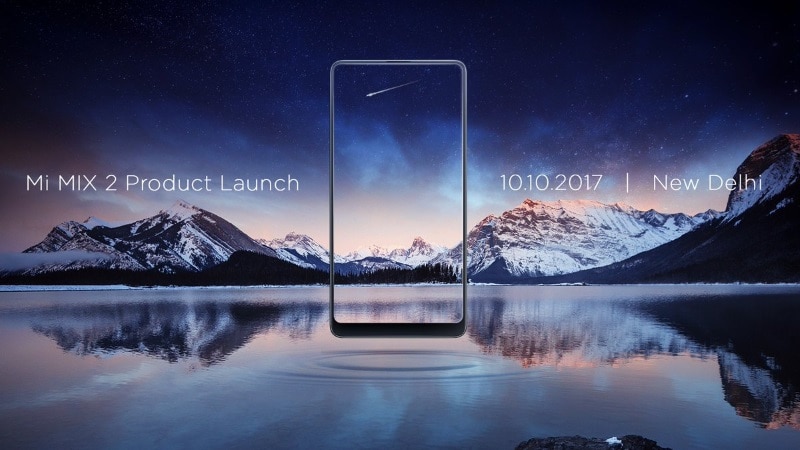
Xiaomi Mi MIX 2 With Bezel-Less Display Set to Launch in India on October 10

 Xiaomi Mi MIX 2 With Bezel-Less Display Set to Launch in India on October 10

Mi MIX 2 India launch date has been announced by the company's India MD Manu Kumar Jain via a tweet. He had confirmed soon after the bezel-less phone's unveiling in China that it will be released in India, but had not specified a date at the time. Now, he has said that the Mi MIX 2 India launch will be held on October 10 in New Delhi. The Mi MIX 2 will become the latest in a series of bezel-less smartphones in India, joining the likes of Samsung Galaxy S8, Galaxy S8+ and Note 8, LG Q6, and Vivo V7+; iPhone X and Google Pixel 2 XL will join the list in November too.
In his announcement tweet on Wednesday, Manu Kumar Jain said, "The wait is over.. #MiMIX2 is coming to India! Come Oct 10 and hail the Mi MIX 2."

Xiaomi Mi MIX 2 price, specifications

The Xiaomi Mi MIX 2 was launched by the company with a variant called Mi MIX 2 Special Edition. Notably, there are three variants of the Mi MIX 2 smartphone's standard non-special edition. The Xiaomi Mi MIX 2 was priced in China at CNY 3,299 (roughly Rs. 32,300) for its 6GB RAM/ 64GB storage variant, CNY 3,599 (roughly Rs. 35,300) for the 6GB RAM/ 128GB storage variant, and CNY 3,999 (roughly Rs. 39,200) for the 6GB RAM/ 256GB storage variant.
If we talk about the special edition variant, the Xiaomi Mi MIX 2 Special Edition, has been priced at priced at CNY 4,699 (roughly Rs. 46,000). The special edition variant comes with an all-ceramic body, 8GB of RAM, and 128GB of storage. Just like the last time, the announcement contains the name of Mi MIX 2 only, which makes it unclear if Xiaomi will launch Mi MIX 2 Special Edition in India as well.
Moving to the specifications, Xiaomi Mi MIX 2 sports a 5.99-inch full-HD (1080x2160 pixels) 18:9 display with a pixel density of 403ppi and a DCI-P3 colour gamut. It is powered by a Qualcomm Snapdragon 835 SoC clocked at up to 2.45GHz and coupled with 6GB of RAM - up to 8GB RAM for the Special Edition (Mi MIX 2 Special Edition). It sports a 12-megapixel Sony IMX386 sensor with 1.25-micron pixels, 4-axis optical image stabilisation, 5-piece lens, an f/2.0 aperture, as well as a facial recognition technology. On the front, it packs a 5-megapixel camera with the same facial recognition function. Connectivity options include 4G LTE, dual-band (2.4GHz and 5GHz) Wi-Fi 802.11ac, GPS/ A-GPS, Bluetooth v5.0, and USB Type-C.

Specifications

Display

5.99-inch

Processor

octa-core

Front Camera

5-megapixel

Resolution

1080x2160 pixels

RAM

6GB

OS

Android

Storage

64GB

Rear Camera

12-megapixel

Battery Capacity

3400mAh
 

Flipkart Sale Offers Deals on Xiaomi Redmi Note 4, iPhone 8, Laptops, and More


The Flipkart sale started at 12am IST on Thursday, giving competition to Amazon and its ongoing sale. Flipkart's Festive Dhamaka Days sale will run till October 8, and is the company's second major sale of this festive season. The e-commerce titan has tied up with Axis Bank to provide 10 percent cashback to credit and debit card holders, with maximum cashback of Rs. 2,000 (no minimum order value). You can also pay using PhonePe while placing the order or at delivery to get a 20 percent cashback (maximum Rs. 200). There are also buyback guarantees, no cost EMIs, and exchange discounts, apart from the flat discounts already being provided in the sale. If you are in the market for a smartphone, laptop, tablets or other gadgets, we have picked out the best Flipkart sale offers on electronics.

Apple iPhone 8 64GB
 
Flipkart is offering the iPhone 8 64GB at a discounted price of Rs. 59,999 (MRP Rs. 64,000). You can exchange your old phone and get an additional discount up to Rs. 20,000 on your purchase. To sweeten the deal further, Flipkart is also offering a buyback guarantee for an additional Rs. 99. You can return your iPhone to Flipkart under the buyback offer and get up to Rs. 33,000 back (if you return within 6-8 months), Rs. 28,000 (if you return within 9-12 months) and Rs. 20,000 (if you return within 13-15 months). However, this applies to the exchange offer on Flipkart, which means you'll get this value only if you buy a new phone at the same time.
The iPhone 8 feature's an all-new design this year with a glass back. The iPhone 8 comes with a 4.7-inch Retina HD display with True Tone support. It is powered by the new A11 Bionic chip which is 70 percent faster than the previous A10 Fusion chip. The iPhone 8 also features a 12-megapixel camera at the back and a 7-megapixel front-facing camera.
Price: Rs. 59,999 (MRP Rs. 64,000)

Xiaomi Redmi Note 4 64GB
 
The 64GB + 4GB variant of popular budget smartphone Xiaomi Redmi Note 4 is available with a flat Rs. 2,000, bringing down the handset's price to Rs. 10,999. At Rs. 99, you can get the 1-year buyback guarantee, which will fetch you value of Rs. 6,000 if you exchange the Redmi Note 4 between 6-8 months and Rs. 4,700 between 9-12 months. If you plan to use the phone longer, you can purchase the 1-year extended warranty at Rs. 455, or 1-year damage protection at Rs. 975.
As for the features and specifications, the Android smartphone has a 5.5-inch full-HD screen, octa-core 2GHz Snapdragon 625 processor, 64GB built-in storage, microSD card support up to 128GB, 4GB RAM, 13-megapixel rear camera, 5-megapixel front camera, 4G VoLTE, 4100mAh battery, and dual SIM functionality.
Price: Rs. 10,999 (MRP Rs. 12,999)

MSI P Core 15.6-inch gaming laptop
 
If you're looking for a good deal on a gaming laptop, the MSI P Core 15.6-inch gaming laptop is down to Rs. 60,990 (MRP Rs. 83,990) during the Flipkart sale. The laptop is powered by the seventh-generation Core i7 processor, supported by 16GB of RAM. It comes with a 1TB hard drive and also includes a graphics card with 4GB of RAM. You'll need to purchase an operating system separately though. At this price point, it's quite a steal.
Price: Rs. 60,990 (MRP Rs. 83,990)

Mi Air Purifier 2
 
The festive season brings a lot of cheer each year, but it also comes at a time when the air is too bad to breathe. Prepare for it this year with the Mi Air Purifier 2. The air purifier is down to Rs. 8,499 (MRP Rs. 12,990) as part of the Flipkart sale. You can get an additional 10 percent cashback by paying with an Axis Bank credit or debit card. The Mi Air Purifier 2 can clean your room as quickly as 10 minutes, depending on the size of your room. It can be controlled and monitored easily using a smartphone app.
Price: Rs. 8,499 (MRP Rs. 12,990)

Lenovo K8 Plus 32GB
 
The Lenovo K8 Plus 32GB is a decent Android smartphone at a price point of Rs. 10,000. Currently down to Rs. 9,499 (MRP Rs. 10,999), the Lenovo K8 Plus can be paired with an exchange offer to get an additional discount of up to Rs. 9,000. The smartphone features a 5.2-inch Full HD display and comes with a dual-camera assembly at the back consisting of a 13-megapixel and 5-megapixel combination. At the front, it includes an 8-megapixel camera. It includes a 4000mAh battery which should be good enough for a full day's usage.
Price: Rs. 9,499 (MRP Rs. 10,999)

Apple iPad 9.7-inch 32GB
 
The iPad 9.7-inch 32GB is available again at a price of Rs. 22,900 (MRP Rs. 28,000). The iPad is powered by Apple's A9 chip, supported by 2GB of RAM, and runs iOS 10 out of the box. It comes with an 8-megapixel rear camera and includes a fingerprint sensor on the home button. There's a 1.2-megapixel front camera for video calls.
Price: Rs. 22,900 (MRP Rs. 28,000)

MSI P Core 15.6-inch gaming laptop
 
Another gaming laptop that's available at a discount on today's Flipkart sale is the MSI P Core 15.6-inch laptop with 8GB RAM. This variant is powered by the seventh-generation Core i7 processor, supported by 8GB of RAM and it comes with a 128GB SSD (solid state drive). It is currently priced at Rs. 54,990 (MRP Rs. 78,990). The laptop features the NVIDIA Geforce GTX 1050 graphics card with 4GB of video RAM.
Price: Rs. 54,990 (MRP Rs. 78,990)

PhonePe Raises Over Rs. 254 Crores From Flipkart Payments

 PhonePe Raises Over Rs. 254 Crores From Flipkart Payments

PhonePe, the digital payments arm of e-commerce giant Flipkart, has raised over Rs. 254 crores from Singapore-based Flipkart Payments, according to documents filed with the Corporate Affairs Ministry.

According to the documents, Flipkart Payments has been allotted 17.60 lakh shares of face value of Rs. 10 each, at a higher premium of about Rs. 1,435 each, aggregating to Rs 254.43 crore on a rights basis.

The resolution to this effect was passed at the meeting of board of directors of PhonePe on August 30, 2017, it added.

Previously, PhonePe had received Rs. 83.68 crores in October, 2016 through allocation of 41.84 lakh shares at a premium of Rs. 190 per share.
Formerly known as FX Mart Private Ltd, PhonePe competes with the likes of Amazon Pay, Paytm and MobiKwik.

The new round of funding will help PhonePe strengthen its position in the market at a time when digital transactions are becoming a popular mode of payment.
PhonePe had stated that it drove 45 percent of all UPI transactions in August (at 7.47 million) this year, and had seen 66 percent growth in volume of transactions over the previous month.

The funding in PhonePe comes after Flipkart had received $2.5 billion from investors like SoftBank early in the year. Flipkart had also raised $1.4 billion from Microsoft, Tencent and eBay Inc in April this year.

Reliance and Apple will soon 'discover Bharat'

Reliance is also going to enter into bundling plans for the upcoming iPhone X that are similar to those for iPhone 8 and 8 Plus, and which would include assured buyback and free data, the industry executives said.

Reliance is also going to enter into bundling plans for the upcoming iPhone X that are similar to those for iPhone 8 and 8 Plus, and which would include assured buyback and free data, the industry executives said.


Apple and Reliance Industries, the most valuable companies in the US and India, are entering into a "deep" local partnership that will harness the conglomerate's telecom and retailing networks to help the iconic American phone maker "discover Bharat" and take the brand to 900 cities and towns. The exercise also seeks to establish Reliance as the largest seller of iPhones in the country.
As part of the arrangement that may eventually help iPhones reach more than 2,000 points of sale through Reliance Digital and Reliance Jio, Reliance is now undertaking the distribution itself, three senior industry executives told ET. Earlier, distributors would reach out to Reliance Digital stores.

"Apple wants to expand rapidly in the smaller cities and towns to sell iPhones where Reliance has a ready infrastructure through its retail and telecom businesses. Apple's retail presence will immediately double to over 4,000 outlets through this. Reliance, too, wants to sell phones from Rs 999 to $999. Hence, it's a win-win relationship for both," a person aware of the plans said. 


Reliance is also going to enter into bundling plans for the upcoming iPhone X that are similar to those for iPhone 8 and 8 Plus, and which would include assured buyback and free data, the industry executives said. The company wants to become the largest seller of iPhones in the country, a laurel now shared by the two largest e-commerce marketplaces, -Flipkart and Amazon.


"While there has been muted demand for the just launched iPhone 8 and 8 Plus, Reliance Digital has sold more units than in earlier years. And with iPhone X, Reliance is targeting to become the largest seller," another person said. 


Emails sent to Reliance and Apple did not elicit any response until the publication of this report Wednesday late evening.


Apple currently sells iPhones through five distributors in India - Brightstar, HCL Infosystems, Ingram Micro, Rashi Peripherals, and Redington. Reliance has been an old partner of Apple since it was one of the earliest franchisees for the Apple exclusive stores. Chairman Mukesh Ambani and Apple CEO Tim Cook started talks again during Cook's India visit in May last year.

Cook has since then praised Jio's expanding 4G service in analyst calls. Akash Ambani and Cook through video-conferencing launched the Reliance Jio bundling offer on the new iPhone 8 and 8 Plus last week. As part of this, consumers will get assured buyback of 70% on their iPhones 8 and 8 Plus models and additional data services. Both companies will now roll out similar plans for the upcoming super-premium iPhone X that will be launched in November.

Google Pixel XL 2 vs Apple iPhone X vs Samsung Galaxy Note 8 vs LG V30: A comparison


Google Pixel XL 2

Google Pixel XL 2


NEW DELHI: Google's Pixel smartphones have just got a sequel, Pixel 2 and Pixel XL 2. The new Pixel smartphones were launched on October 4 at an event in San Francisco along with few other hardware devices from the search giant. Powered by Qualcomm Snapdragon 835, the smartphone are already up for pre-orders in the US. In India, the pre-orders will begin from October 26. Wonder how the big-screen Pixel XL 2 competes against the other phablet flagships like iPhone X, Samsung Galaxy Note 8 and LG V30? Here's a comparing the phones on specs front.

 Display 

 
Google Pixel XL 2: 6-inch display with 2880x1440 pixels resolution
Apple iPhone X: 5.8-inch display with 2436x1135 pixels resolution
Samsung Galaxy Note 8: 6.3-inch dispay 2960x1440 pixels resolution
LG V30: 6-inch display 2880x1440 pixels resolution

Operating system 

 
Google Pixel XL 2: Android 8.0 Oreo
Apple iPhone X: iOS 11
Samsung Galaxy Note 8: Android Nougat 7.1.1
LG V30: Android Nougat 7.1.2

Processor

 
Google Pixel XL 2: Octa-core Qualcomm Snapdragon 835
Apple iPhone X: A11 Bionic chip
Samsung Galaxy Note 8: Octa-core Qualcomm Snapdragon 835
LG V30: Octa-core Qualcomm Snapdragon 835

RAM

 
Google Pixel XL 2: 4GB
Apple iPhone X: NA
Samsung Galaxy Note 8: 6GB
LG V30: 4GB

Storage

 
Google Pixel XL 2: 64GB/128GB
Apple iPhone X: 64GB/256GB
Samsung Galaxy Note 8: 64GB
LG V30: 64GB/128GB

Camera 

 
Google Pixel XL 2: 12MP rear and 8MP front camera
Apple iPhone X: Dual 12MP rear and 7MP front camera
Samsung Galaxy Note 8: Dual 12MP rear and 8MP front camera
LG V30: 16MP + 13MP rear and 5MP front camera

Battery

 
Google Pixel XL 2: 3,520 mAh
Apple iPhone X: 21 hours of talktime on wireless, 60 hours of audio playback, 12 hours of internet, and 13 hours of video playback
Samsung Galaxy Note 8: 3,300 mAh
LG V30: 3,300 mAh

Special features 

 
Google Pixel XL 2: Google Assistant, Daydream VR-ready and unlimited cloud storage
Apple iPhone X: Wireless charging, Face ID, splash, water and dust resistance


Samsung Galaxy Note 8: S Pen stylus, water-resistant, wireless charging
LG V30: Water resistant (IP68), wireless charging, floating Bar tab

Price
 
Google Pixel XL 2: Starting at Rs 73,000
Apple iPhone X: Starting at Rs 89,000
Samsung Galaxy Note 8: Rs 67,900
LG V30: Yet to launch in India

Zara goes online in India


Zara, opened its first store in India in 2010, through Inditex Trent Retail India, a joint-venture with Tata Group's hypermarket and department stores company Trent.

Zara, opened its first store in India in 2010, through Inditex Trent Retail India, a joint-venture with Tata Group's hypermarket and department stores company Trent.

NEW DELHI: Spanish fast-fashion retailer Zara opened its online store in India on Wednesday, seven years after opening its first physical store. But it's just in time for the festive season.

Zara, opened its first store in India in 2010, through Inditex Trent Retail India, a joint-venture with Tata Group's hypermarket and department stores company Trent. With competition among fashion retailers gathering pace, this is part of Zara's parent Inditex's strategy to beef up its online play. Zara's closest rival, Hennes & Mauritz (H&M), also announced that it will open its online store in India soon.

Through its online store, customers will be able to buy the full range of goods that Zara offers in its physical stores. Standard deliveries will be charged at around Rs 300, while orders above Rs 4,000 will be delivered free. At the backend, Zara has been working with a warehouse in Haryana. 

Google's new iPhone rivals, Pixel 2 and Pixel XL, announced: Specifications, India price, availability and all you need to know

1. Google's new iPhone rivals, Pixel 2 and Pixel XL, announced: Specifications, India price, availability and all you need to know

Google's new iPhone rivals, Pixel 2 and Pixel XL, announced: Specifications, India price, availability and all you need to know

The new made-by-Google smartphones -- Pixel 2 and Pixel 2 XL -- are here. With the Pixel 2 and Pixel 2 XL, the company is once again asserting its hardware ambitions. The two phones were unveiled along with a slew of other Google-branded hardware gadgets including a new camera, laptop, earbuds, VR headset, speakers and upgrades to its home automation range.

Google's new Pixel smartphones are largely identical, except for some differences in size and display. Here's all you need to know about Pixel 2 and Pixel XL which the Google CEO Sundar Pichai termed 'smarter phones'.


2.​ India pricing: Pixel 2 starts at Rs 61,000; Pixel 2 XL starts at Rs 73,000

 
​ India pricing: Pixel 2 starts at Rs 61,000; Pixel 2 XL starts at Rs 73,000

The price of the Google Pixel 2 in India starts at Rs 61,000 (64GB), the 128GB variant is priced at Rs 70,000. As for Pixel 2 XL, its price starts at Rs 73,000 (64GB). The 128GB variant will be available at Rs 83,000.

​3. India availability: Will be up for pre-order starting October 26


​ India availability: Will be up for pre-order starting October 26

Though Google said that India is among the list of nations where the two phones will arrive in the first wave, the pre-orders for the devices is starting weeks after they go on pre-order in the US. In India, interested customers can pre-order the devices starting October 26. The Pixel 2 will hit retail shelves on November 1, while Pixel 2 XL will go on sale from November 15.

​4. Both phones are Flipkart exclusive (online)

​ Both phones are Flipkart exclusive (online)

The new Pixel phones will be exclusive to Flipkart online.


5. Screen sizes: Pixel 2 has 5-inch screen, Pixel 2 XL sports 6-inch screen

Screen sizes: Pixel 2 has 5-inch screen, Pixel 2 XL sports 6-inch screen

While the smaller Pixel 2 features a 5-inch full HD screen, the larger Google Pixel 2 XL sports a 6-inch full-HD display.

6. Both phones run on Android 8.0 Oreo

Both phones run on Android 8.0 Oreo

Both the phones run on Android Oreo, the freshest version of Google's Android OS. The company has also promised latest security updates and patches for the next three years to the devices.

7. Are powered by Snapdragon 835 processor


Are powered by Snapdragon 835 processor

The smartphones run on Qualcomm's current flagship processor Snapdragon 835. The processor also powers present flagships like OnePlus 5, Samsung Galaxy S8, Galaxy S8 Plus and HTC U11.


8. Pixel 2 XL has been built by LG

​ Pixel 2 XL has been built by LG

As widely-speculated, the big-screen Pixel 2 XL has been developed by Korean electronics giant LG. Pixel 2 has been developed by HTC's Pixel division, which Google acquired recently.

9. Boasts of OLED displays

​ Boasts of OLED displays

Both the phones OLED displays. And Google claims that they are generally superior to their Apple iPhone counterparts. The Pixel 2 has a display density of 441 PPI, while Pixel 2 XL comes with POLED display with 538 PPI; iPhone X has an OLED display with 458 PPI. The other two new iPhones, iPhone 8 and iPhone 8 Plus, come with LCD displays.

10. Come with 4GB RAM; and in two storage variants -- 64GB and 128GB

​ Come with 4GB RAM; and in two storage variants -- 64GB and 128GB

Both the phones have 4GB RAM and come in two storage variants 64GB and 128GB. There's no support for micro-SD card.


11. Have 'squeezing sides'

Have 'squeezing sides'

Google's new phones have HTC U11's 'squeezable sides'. This means they have an 'active edge' which means that squeezing the phone’s sides will fire up Google's virtual voice assistant.

12. No headphone jack

No headphone jack

Google has dropped the headphone jack in both Pixel 2 and Pixel 2 XL smartphones. The duo have have a single USB-C port at the bottom.

13. Front-facing speakers are back

Front-facing speakers are back

Both the smartphones come with dual front-facing speakers. One of the key features of Nexus smartphone range, the speakers were missing in the last year's Pixel devices.


​14. Come in three colour options

​ Come in three colour options

The new Pixel smartphones come in three colors -- Just Black, Clearly White and Kinda Blue.

15. No dual-camera set up at the back

No dual-camera set up at the back

Pixel 2 and Pixel 2 XL come sans one of the often-touted features of this year's flagship smartphones, dual-lens camera at the back. Both the Pixel 2 and Pixel 2 XL phones use a single 12.2-megapixel lens at the back. Pixel 2 has a 12.2-megapixel rear camera with an f/1.8 aperture and optical image stabilization. Google has instead added 'dual-pixel sensors' on both the new phones, this means that the lenses can focus faster and achieve the background-blur effect of 'portrait mode' shots. Buyers of the two phones will also get unlimited storage on Google Photos.

Micromax Canvas Infinity to go on sale on Amazon today

 Micromax Canvas Infinity to go on sale on Amazon today

NEW DELHI: Indian smartphone maker Micromax launched its Canvas infinity smartphone in India recently at Rs 9,999. The smartphone will go on sale today (September 1) on Amazon at 2 p.m.


As part of the sale, the company is also giving some offers to the customers. The Micromax Canvas Infinity buyers will get a cashback of Rs 250 if the make the payment using Amazon Pay. Along with this, they will also get 30GB of additional 4G data from Jio and Kindle books of worth Rs 375 free with the device. Lastly, the customers will also get 24 hour service facility with the smartphone.

The Micromax Canvas Infinity features a 5.7-inch HD display with 720x1280 pixel resolution and 18:9 screen ratio. The smartphone runs Android 7.1 Nougat operating system and the company also announced that the device will also receive Android O update.

 The Micromax Canvas Infinity is powered by Qualcomm Snapdragon 425 processor paired with 3GB of RAM. The smartphone comes with 32GB of internal storage which can be expanded up to 128GB by installing a microSD card. The smartphone sports a 13MP rear camera with F/2.0 aperture, 5P lens, super pixel technology and LED flash. There's also a 16MP selfie camera with F/2.0 aperture and real time bokeh selfie. Along with this, the front camera also has a smile shot mode.


The smartphone comes equipped with a fingerprint sensor and is backed by a 2,900 mAh battery. In terms of connectivity the device offers 4G, VoLTE, 3G, Wi-Fi, Bluetooth, GPS and USB OTG.

Nokia 8 - It has 5 cool features but it's also missing 5 key things


Nokia 8 

The Nokia 8 is finally here. It not only the first high-end smartphone from Nokia in years, but is the first flagship from the iconic Finnish company that runs on Android. Thus there is a lot of hype and anticipation surrounding the Nokia 8. And Nokia has left no stone un-turned in an effort to please ardent Nokia fans - the smartphone is crafted from a single block of aluminum, runs on a pure version of Android Nougat, has an ultra-sharp display and comes with Carl Zeiss powered dual cameras at the rear.
The Nokia 8 arrives in an extremely mature and competitive marketplace dominated by the likes of the Samsung Galaxy S8, iPhone 7 and Google Pixel. While a lot of leeway was given to the Nokia 3, Nokia 5 and Nokia 6 due to their price and budget positioning, no such allowances can be given to the Nokia 8 which aims to compete in the ruthless high-end segment of the market.
The Nokia 8 looks like a fairly accomplished product and an excellent first Android flagship smartphone from HMD Global, the company behind Nokia's revival. However, it does have its share of weaknesses. Here are the 5 ways the Nokia 8 succeeds and 5 areas where the smartphone is lacking:

Where it shines

Exquisite looks and craftsmanship
Carrying forward Nokia's heritage of excellent smartphone design, the Nokia 8 is carved out of a single block of series 6000 aluminum and looks very retro chic. With the Nokia 8's design, HMD Global has managed to retain the soul of Nokia smartphones of old while making it look contemporary and modern.
The level of craftsmanship is impressive. Each smartphone goes through a 40-stage process of machining, anodising and polishing. Nokia claims that the high-gloss finish on certain variants takes over 20 hours to perfect. If the build quality of the Nokia 3 and Nokia 6 is anything to go by, the Nokia 8 is also sure to continue Nokia's tradition of building smartphones like a tank.
The Nokia 8 is only 7.3 mm thin in average and 4.3mm thin at the edges. It is available in four colour variants - Polished Blue, Polished Copper, Tempered Blue and Steel.
Top of the line specifications
The internals of the Nokia 8 are on par with any 2017 flagship out there - that is to say they do not disappoint. The smartphone is powered by Qualcomm's latest flagship processor, the Snapdragon 835 paired with 4GB of RAM, the Adreno 540 GPU and a 3,090mAh battery with QuickCharge 3.0 support.
Additionally, the smartphone comes with 64GB of internal storage which can be expanded via a microSD card (of up to 256GB) and a fingerprint sensor embedded into the home button up front. Many flagship smartphones as of late do not feature any sort of expandable storage so Nokia should be lauded for that.
Nokia 8 also comes with an innovative heat management solution - a full-length graphite shielded copper cooling pipe dissipates heat across the full length and breadth of the smartphone. Nokia asserts that this allows the smartphone to stay cool even while being pushed.
Pixel perfect display
The Nokia 8 comes with a 5.3-inch Quad HD display with a resolution of 2560 x 1440. It is covered by 2.5D gorilla Glass 5 for protection against scratches. Aside from the Quad HD resolution, what makes this display stand out is the fact that it has a particularly high maximum brightness of 700 Nits and comes with Nokia's trademark Glance Screen which we used to see in Lumia smartphones of old.
Additionally, because of the relatively smaller size of the display, the pixel density (544 ppi) is higher than most smartphones out there with QuadHD displays. This should help the Nokia 8 display sharper text and images.
Stock Android
One of the biggest talking points of Nokia's entire Android smartphone line-up is the fact it runs on stock Android. Unlike many other smartphone manufacturers who choose to skin Android to a point that it fails to look like Google's operating system altogether, Nokia has decided to leave Android untouched.

These OEM skins are full of bloat, tend to lag with time and worst of all, do not get timely Android version updates. Bucking this trend, the marketing for Nokia's Android line-up reads - 'Pure, secure and up-to date'. The Nokia 8 runs on a 100 percent stock build of Android 7.1.1 Nougat right out of the box with no extraneous third-party apps and overlays.
Nokia has also promised that the smartphone will be updated to Android O in the future. While it is just a promise for now and we will have to see how Nokia lives up to it, the company does boldly claim that they will be one of the first, if not the first non Google manufacturers to release Android O to their smartphones.
A generous dose of multimedia features
Nokia, through their partnership with lens-maker Carl Zeiss has always been known for making great camera phones - just look at the Nokia N95, Lumia 1020 and Nokia 808 PureView for proof. With the Nokia 8, HMD Global aims to add another chapter to this storied history.
The Nokia 8 comes with a dual camera setup at the rear with ZEISS optics - a 13MP primary RGB (color) sensor paired with a 13MP monochrome (black and white) sensor which allows for the capture of depth of field information and helps in low-light photography. The rear camera setup can also shoots videos in 4K and comes with phase detection auto-focus and a dual-LED flash.
Unlike many other smartphones where the secondary sensor is reduced to being a gimmick that shoots just bokeh shots, the secondary camera on the Nokia 8 actually improves low-light shots by capturing more data. On the front of the smartphone is a 13MP sensor with phase detection autofocus which is also made in conjunction with ZEISS optics.
The Nokia 8 also comes with OZO Audio which allows for the capture of 360 degree spatial surround sound via the phone's three microphones and Nokia's own acoustic algorithms. Nokia claims that  these clips can also be played back on other phones which do not have OZO audio. Audio enthusiasts will also like the fact that the Nokia 8 comes with a 3.5mm jack, a port which is fast becoming extinct in today's flagship smartphones.

Where it lacks

Lack of proper waterproofing
While most flagships these days such as the Samsung Galaxy S8 and LG G6 come with IP68 dust and water resistance, the Nokia 8 is only IP54 certified. Thus while the Nokia 8 is only splash proof, IP68 smartphones can be dunked in up to 1.5 metre of water for up to 30 minutes making them much more water resistant.
Even the iPhone 7 comes with IP67 water resistance, which while not as good as IP68, still allows you to immerse the phone in water. The Nokia 8 on the other hand is only protected against light splashes of water. Nokia claims that in order to achieve a higher IP rating, they would have had to make trade-offs with the design that they were not willing to take.
Wireless charging
The lack of wireless charging in the Nokia 8 is a bit disappointing. Many smartphones like the Samsung Galaxy S8 and LG G6 feature the 'Qi' wireless charging standard which allows the smartphone to be charged wirelessly when placed on a wireless charging pad.
While wireless charging has not taken off that much as of now, many people are big fans of the feature. Also, wireless charging might become mainstream in the coming months with Apple set to include the feature in the upcoming iPhone 7s, iPhone 7s Plus and iPhone 8.
Bezels in 2017
While the Nokia 8 looks very sleek and classy, it does not come with a bezel-less design seen in recent flagships such as the Samsung Galaxy S8 or the LG G6. The bezels on top and bottom are quite substantial in a day and age where smartphone design is moving towards edge-to-edge displays and minimal screen to body ratios. Even the upcoming iPhone 8 is expected to come with a striking bezel-less design.
Stereo speakers
Considering that the Nokia 8 comes with a 3.5mm headphone jack and audio centric features like OZO Audio, it is disappointing that the smartphone does not come with stereo speakers.
Imaging, audio and video has always been the strong points of Nokia and the company could have really capitalised on the same in a way that HTC has done with the U11. Stereo speakers, good earphones out of the box and audio features like Dolby ATMOS would have gone a long way in helping the Nokia 8 stand out from the crowd.
Say no to Hybrid SIM slots
No one likes a Hybrid SIM slot. What is the point of making a person choose between expanding storage or using his secondary SIM card? Considering how much HMD Global stresses on the importance of a stress free user experience, the use of a Hybrid SIM Slot on the Nokia 8, which basically holds a user to ransom, is very puzzling.


Copyright © 2014 teqnew