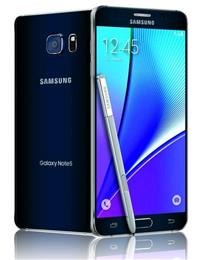
If you look beyond the design similarities, Samsung's fixed nearly
everything that was disappointing about the S6. The dropped
waterproofing is back once again, with IP68 rating. The battery has
boosted from 2550mAh to 3000mAh with little change in the dimensions.
The microSD expandable memory is back in force.
- Read our hands on Samsung Galaxy S7 Edge review

And,
you know what? The Galaxy S7 feels like a completely different phone in
the hand thanks to the subtle curve on the back, taken from the Note 5. Imagine the sides from the S6 Edge's screen used on the rear, and you'll start to understand what I mean.
However,
there's nothing that will stop people seeing the Galaxy S7 as a phone
that's nothing more than the Galaxy S6S, a handset with the same feature
set that comes with a microSD slot - and to a degree, they'd be right.
Check out our hands on and first impressions Galaxy S7 vide
It's now waterproof - well, I say now, but in reality this was already added into the
Galaxy S5
before being stripped off to allow for the redesigned Galaxy S6. It's
impressive to see a phone that's this well-crafted being able to be
dunked into a glass of water - it validates what Sony's been doing for
years.

Sadly
there's no USB-C connector on the bottom - well, sadly for the tech fan
who would have liked to easily plug in their charger either way up and
enjoyed the faster speeds on offer. Less of a sad day for those of us
who have approximately 4.765 billion micro USB chargers around the
house.
The microSD slot will have Samsung fans cheering around the
world - the reason for its disappearance in the Galaxy S6 was
performance, according to the South Korean brand, which is now claiming
to have fixed that issue and will see no slowdown for phones imbued with
the expandable memory.

However,
the brand has confusingly chosen against using Google's Adoptable
Storage, which was added into Android Marshmallow and allows users to
'hard code' microSD cards into the internal storage - meaning you can
install massive apps onto them with ease.
The downside is you
can't swap them in and out without confusing the phone badly - but given
very few of us ever do that anyway, having bigger internal storage for a
low price (a decent microSD card is a lot cheaper than jumping up
gigabyte sizes in phone models) would have been a great feature and one
I'm confused Samsung dropped.
The 5.1-inch screen is back once
again, without the rumored 3D-Touch style screen that would have been a
direct nod to Apple. It's the same QHD resolution that we're seeing on
multiple smartphones these days (thankfully, Samsung decided to resist
the chance to join Sony's insane 4K revolution) and it's still the
best-looking screen on the market.

The
5.1-inch screen is still as pin sharp as ever, and even without any
dedicated QHD content to take advantage of the high-res screen, web
browsing and watching video is still an impressove experience. The Super
AMOLED technology used inside still offers huge benefits in terms of
color reproduction and contrast, so everything looks stark and clear.
I'm
well aware that's something I've written for years about Samsung
screens, but there's nothing that I can see that outstrips it at the
moment. Even the over-saturation problems that dogged AMOLED displays in
the early days have been fixed by Samsung, allowing you to choose the
color level you're happy with.
But Samsung might have pushed too
far with the tech this year, banking on it too much to introduce another
key feature: the always on display. It's exactly how it sounds: when
the Galaxy S7 is in standby mode it'll show a clock, calendar or an
'image' (which is really just a weird pattern), so you won't have to
constantly turn on the display to see what time it is.

Samsung
promises that this won't take more than 1% of battery life per hour,
thanks to being able to control every pixel of the Super AMOLED display -
but that's still around 15% of your phone's juice gone per working day.
Given Samsung's terrible battery management in the S6 and Edge, I can't
see this as a positive.

It
definitely makes the phone look more fancy when sitting on the desk,
but it's not something that I felt was missing from my life
particularly.
That said, maybe Samsung knows something that the
rest of us can't know yet: that it's fixed the battery life issues that
plagued its previous model.
It was one of TechRadar's Biggest
Mysteries Of 2015 (TM): why the Galaxy S6 would blitz every single one
of our battery tests, head and shoulders above the rest of the market in
terms of gaming, video watching, web browsing and standby time - and
yet would be in the danger zone by 4PM in an average working day after a
few months' use.
It seems the phone would stay awake too often,
apps chattering to the network and the accelerometer activating too
easily. However, with the 3000mAh battery now inside we've got the
biggest power pack Samsung's ever stuffed into its flagship smartphone,
and combined with the more efficient Android Marshmallow we could
finally see a long-lasting battery life on a top Samsung phone.
The
addition of Android Marshmallow means that the Touchwiz interface, so
oft-maligned by the smartphone-buying public, is again stripped back and
the 'Googliness' of the phone is allowed to shine through. There's not a
lot different from the S6 in reality, as the UI there was already much
'flatter' and closer to Google's Material Design.
However, the
stock icons look cleaner once more, the notifications shade is starker
(and white, rather neon green and grey) and the overall operation seems
closer to Google's stock experience.

There
are still reams of Samsung styling throughout the Galaxy S7, meaning
the settings menu has loads of options to mess around with and double
tapping the home button will open up the camera in a flash - overall,
everything is much faster under the finger again, with a decent level of
snappiness whenever you're trying to do anything. Annoyingly the
multi-tasking pane still takes a beat to open, which will only get worse
as the phone gets older, but that's the worst I could find.
The
fingerprint scanner is present and correct once more, although I didn't
get a chance to code in my digit. However, the S6 had a brilliant
biometric option, so this can only get better as time goes on.
The
camera user interface still remains brilliantly / infuriatingly
Samsung, locked in a world of options that confuse the finger as you try
and work out some of the options on offer.
The camera itself is
now much improved, despite the drop in megapixel rating from 16MP to
12MP, designed to help improve low light capabilities. We don't need to
have that many pixels in our smartphone cameras, and Samsung has
thankfully realised that having that high a MP count in the S7 would
have been pointless.

Instead,
we've got 56% bigger pixels, which allow in 25% more light to get
better pictures when you're out and about snapping. The results are
early, but all the pics I took in the low light scenarios came out very
well indeed, and sharply too.
This time last year, Samsung was
droning on about 0.7 seconds auto focus as the best ever, that we didn't
need anything else in the camera when trying to get a clear snap.
However,
with the dual pixel sensor on board now, Samsung is NOW saying 'well,
last year's phone simply wasn't fast enough', even showing side-by-side
comparisons between the Galaxy S6 and S7 and the autofocus abilities.
Whatever
the underlying technology, the S7 takes very quick and very sharp
pictures - if you're not whirling the phone around - pause for even a
millisecond, the results are impressive. It's not game-changing, but a
decent refinement.

Speaking of changing games, the new Game Launcher widget on the S7 (and
S7 Edge) is designed to take that experience up a notch.
You
add games to the folder, and from there you're able to use Game Tools -
a small icon at the side flings up an on-screen menu to let you lock
the buttons, disable alerts, record your game play (with your own face
in the mix) and even minimise the game so you can pop off and answer a
message.
It's a nice idea and one that adds an air of legitimacy
to smartphone gaming, buying into the shareable nature of how people are
playing nowadays. You can even drop the resolution and framerate of
games to save battery life, meaning if you're not playing something with
insane graphical prowess this tool promises to save you battery.
It's
not a huge element in the story of the new Galaxy, but it does add
something for those that love to use their phone as an on-the-go
console.
Early verdict
For all the new features above, I
can't help but feel two things: the Galaxy S7 is the phone that Samsung
should have made last year, and it looks just too similar to the S6.
I
can't decide what it is that irks me about a phone that doesn't change
in design overtly from one iteration to the next. Most people will skip
generations and upgrade from a model two years ago, and if a design is
popular, why step away from it?
Then again, as the 'S' models of
the iPhone show, there's a definite apathy when a phone looks the same
as the previous year, despite packing a load of new features in.
Samsung's
fixed a lot of the problems of the S6 (in theory) here. The battery is
now seemingly big enough, and should be optimised for better power
management.
The camera has been tooled in the right direction -
lower MP count, better pictures - and people like to look at those pics
on the high res screen offered here.
The design might look the
same, but the rear feels massively different in the hand, and that
matters when you're holding it all the time.
But why couldn't
Samsung, a brand famed for putting millions into R&D every day, have
added waterproofing, a larger battery and a microSD slot to its phone
last year? All these things existed in the market, so why did we have to
wait a year to get them?

It
could be that Samsung pushed for the minimum viable product for the
price point to get the biggest profit, or it just couldn't pack all
these ideas into a phone that DESPERATELY needed a design reboot - and
in fairness it was one that worked.
So while this is the phone
that would have crushed all in its path in 2015, there's no denying that
the Samsung S7 is a welcome upgrade in the right key areas - but with
the cheaper S6 on the shelves next to it, there will be many now facing a
tricky choice.
Here's hoping the full review throws up some nice
surprises that push the S7 further ahead in the Galaxy race Samsung is
running.


 Pre-orders have already started and
deliveries will start by March 11, so by then we’ll get more feedback if
people are happy with these new flagships.
Pre-orders have already started and
deliveries will start by March 11, so by then we’ll get more feedback if
people are happy with these new flagships.